Kerekes Band - Fütyül a masina
Periferic Records, 2003
Kerekes Band
Zenekar profil
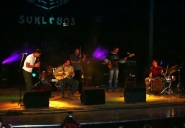
Tagok:
Csarnó Ákos » háromhúros brácsa
Fehér Viktor » dob, ütőgardon
Fehér Zsombor » kromatikus furulya
Kónya Csaba » basszusgitár
Námor Csaba » koboz
Albumok

Kerekes Band and the Tímár Brothers: ‘The engine is whistling...'
"Fütyül a Masina ..." - Authentic Folk Music from Gyimes (Periferic Records - BGCD 115)
Kerekes was founded in 1995. It was at that time that we got acquainted with our masters from the Gyimes region; Viktor and János Tímár. On numerous occasions when we met, besides learning new tunes, we also learnt from them how to play music to dance to. They have moulded our music and minds, enabling us to play and think like Gyimes people.
The Tímár brothers are representatives of a very ancient musical culture. They inherited this tradition from their parents, who had also been exceptionally talented. Besides the usual pairing of violin - gardon (a cello-shaped percussion instrument) the flute - gardon represents a more archaic one. The old Hungarian vocal and instrumental melodies played on these musical instruments accompany the dances of the Csángó people (Hungarians living in and beyond the Eastern Carpathians).
Viktor Tímár was born in 1936 in Hidegség-pataka, a settlement in the Gyimes region populated purely by Hungarians. He started to play the flute at the age of six. Later, at about 10-12 he began to play the violin as well.
János Tímár was born in 1940 in Hidegség-pataka. His father taught him to play the gardon; he plays with his brother as a semi-professional musician.
Albumok
Kerekes Band - Hungarian Folk
Periferic Records, 2001
Periferic Records, 2001
Kerekes Band:
Hungarian Folk Music from Gyimes and Moldva (Periferic Records - BGCD 085)
In the "Kecskés" song we borrowed the change of the key and instruments from Duke Ellington: Cotton Club Stomp. The kobza accords of "Gergelytánc" were born in a music theory lesson. In "Hora Si Sirba" we introduce different styles of Balkan music.
Our favourite song is the "Erdélyes és kecskés" because of the 7/8 time, and Zsombor always starts improvising in this rhythm.
Our first song from Gyimes has roots from the most archaical part of Hungarian folk music, and it sounds as we have learned it from our masters, just like the "Kettős" (medieval dance). The "Kerekes", which is also the name of our band, is a Gyimes round dance. The "Katonás menet" reminds us of military recruiting. We arranged the "Rekecsini botosánka" for a blues scheme. Zsombor Fehér combines the clearness of the authentic folk music and the revolutionary technique of Jimi Hendrix. Viktor Fehér builds the elements of jazz, and funk into the Moldavian music. In "De doi és serény magyaros" there is a sax melody from a wedding of the village Klézse (Moldova). Csaba Námor brings new sound thanks to his experience with rock music, Ákos Csarnó completes the musical harmony with his folk instrument. We've changed the character of "Félöves és hoina" with specially placed half notes. "Öves és kezes" became wild by the full sound kaval. An additional surprise in "Ruszászka": ends in a swing, and a folk-jazz violin solo.
